
Prepare the asset in place
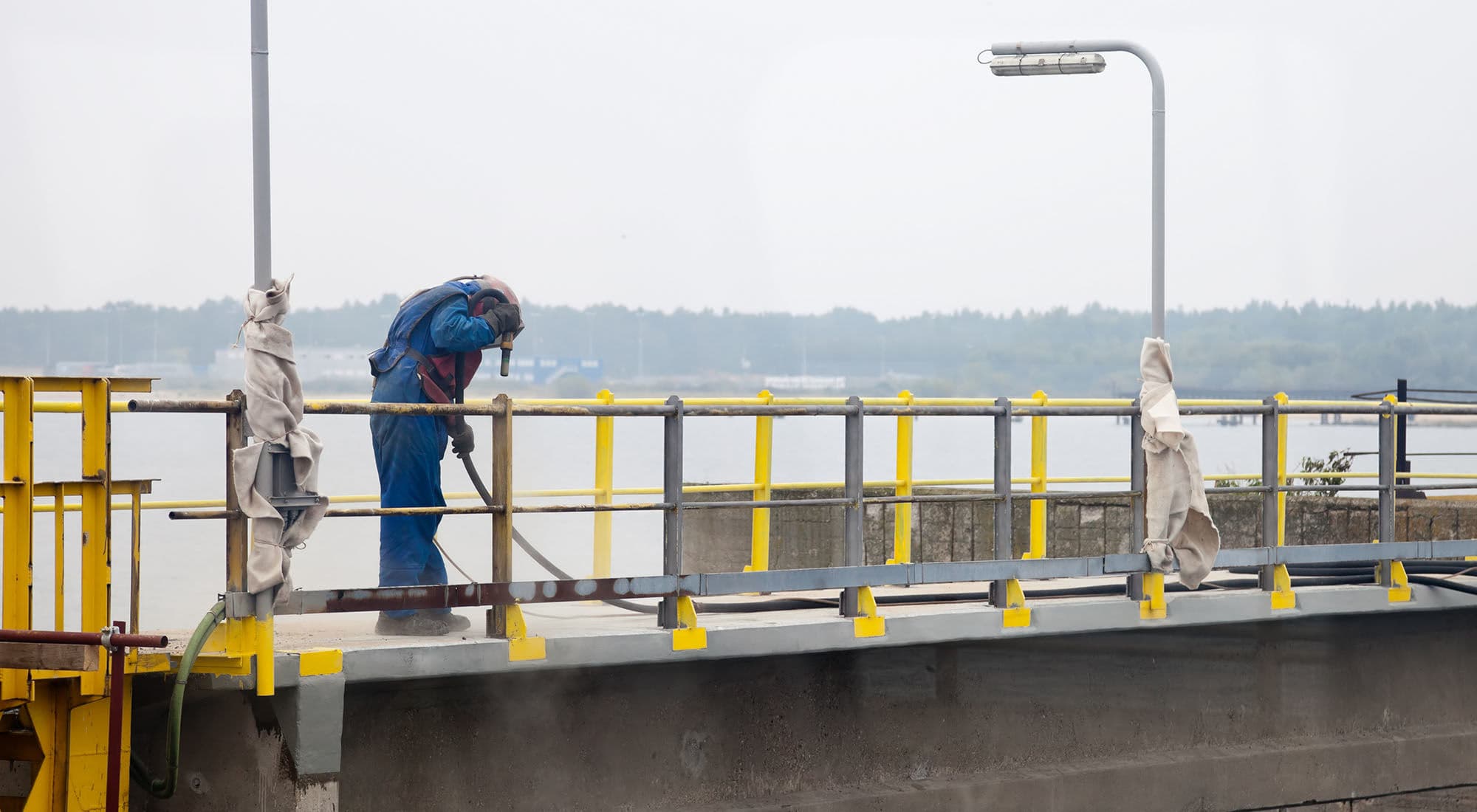
Abrasive blasting equipment is brought to the site so suitable fixed, oversized or impractical-to-move assets can be prepared where they stand.
On-site surface preparation
Service 04
For suitable assets that cannot reasonably be brought to the workshop—or are better handled in place—Kelmscott can assess an on-site blasting approach.
About the service
Mobile blasting brings abrasive surface preparation to suitable assets that are fixed in place, oversized or impractical to transport. It can remove corrosion, failed paint and surface contamination on site, leaving the asset clean and appropriately profiled for its agreed next stage.
Because the work happens outside a controlled workshop, the surrounding site becomes part of the service. Access, available working space, containment, nearby equipment and property, weather, site activity and the next coating stage all need to be considered before mobilisation can be confirmed.
Common applications
Abrasive blasting equipment is brought to the site so suitable fixed, oversized or impractical-to-move assets can be prepared where they stand.
The service can address rust, failed paint and surface contamination where the asset and site conditions are suitable.
The objective is a clean, appropriately profiled surface ready for the agreed coating, repair or inspection stage.
What the work involves
Mobile blasting moves an abrasive preparation process into an active site. Access, nearby people and property, containment, weather and the next project stage all need to be planned.
Vehicle and equipment access, gates, ground conditions, clearances and distance from the work area affect whether the site is practical.
The team needs clear views of the asset and surrounding space, including nearby buildings, vehicles, equipment and active work zones.
Abrasive, coating debris and dust need to be considered around neighbouring property, sensitive equipment and the wider site.
Wind, rain, humidity and an exposed work area can affect scheduling, control and how quickly the prepared surface must move to its next stage.
Working hours, permits, inductions, exclusion zones and interaction with other contractors should be identified during assessment.
Job assessment
A photo of the asset alone is not enough. The team needs to understand the whole site and the conditions around the proposed work area.
Provide the full location so travel, access and mobilisation requirements can be assessed job by job.
Surface material, existing coating, corrosion level and required result determine whether blasting is suitable.
Include wide photos showing buildings, roads, equipment, vegetation, public areas and other nearby activity.
Show entry points, clearances, available work area and any restrictions affecting vehicles or equipment.
Advise of inductions, permits, shutdown windows, work-hour limits and any contractor documentation required.
Explain what will happen to the prepared surface after blasting and who is responsible for that work.
What to expect
The exact work changes with the asset, but the job moves through the same practical stages.
Provide the location, asset photos, wide site views, dimensions, access and surface condition.
The team reviews mobilisation, work area, controls, asset type and project requirements.
Scope, timing, site coordination and the agreed surface outcome are confirmed before mobilisation.
The approved blasting work is carried out on site and the surface moves to its agreed next stage.
For a useful quote
Mobile work is assessed project by project. Show the asset, the access route and the complete work area so the team can judge whether an on-site approach is practical.
Include these details