Prepare the metal
Existing coatings, corrosion and contamination need to be addressed so the powder can be applied to a clean, suitable surface.
Durable finishes for suitable metalwork
Service 03
Give suitable metal parts, components and fabrications a durable, consistent finish matched to the item and your project requirements.
About the service
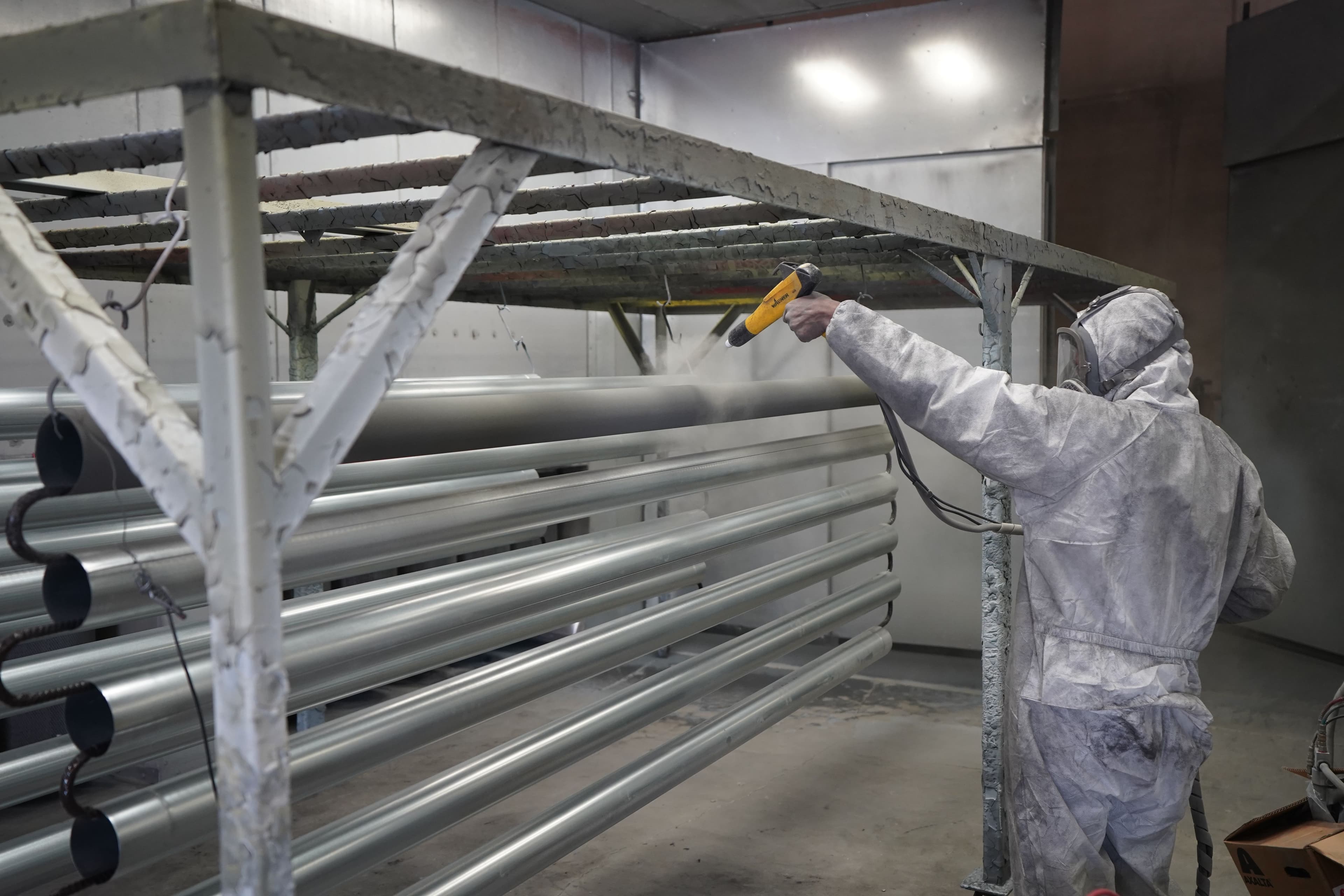
Powder coating applies a dry, electrostatically charged powder to a prepared metal surface. The item is then heated so the powder flows and cures into a continuous finished film, producing an even and durable surface without a conventional liquid-paint application.
It is well suited to many metal parts, frames, brackets and fabricated components where a consistent colour and finish are important. Suitability still depends on the material, construction, exact dimensions and ability to tolerate the curing process, so the complete item is reviewed before the work is confirmed.
Common applications
Existing coatings, corrosion and contamination need to be addressed so the powder can be applied to a clean, suitable surface.
Dry powder is electrostatically applied to the item, allowing it to cover suitable faces, edges and detailed areas before curing.
The coated item is heated so the powder flows and cures into a continuous finished film.
What the work involves
Powder coating is a heat-cured process. Material, dimensions, construction, existing finishes and the required appearance all need to be considered before an item is accepted.
The substrate must be suitable for preparation, electrostatic application and the heat used during curing.
Overall dimensions, enclosed sections, overlapping joins, deep recesses and complex shapes can affect preparation, hanging and coating access.
Old paint, powder, rust and contamination may need to be removed before the new finish can be applied.
Items need practical locations for handling and electrical contact. Small witness marks may remain where the part is hung during coating.
Colour, gloss and texture options depend on the selected powder range and the project requirement, so they are confirmed before work begins.
Job assessment
Exact dimensions and clear photos matter because the whole component—not just the visible face—must move through preparation, coating, curing and handling.
Length, width and height are needed to confirm the item can be safely handled through the process.
Identify the metal type, wall thickness and any mixed materials, rubber, plastic, fillers or sealed cavities.
Photos of corrosion, old powder, paint, grease and damage help establish the preparation required.
For multiple parts, provide quantities and note whether every item is identical or varies in condition.
Include a colour code or sample where possible, along with the preferred gloss or texture.
Explain whether the part will be used indoors, outdoors or in a demanding environment so the requirement can be assessed.
What to expect
The exact work changes with the asset, but the job moves through the same practical stages.
Send photos, quantity, material, exact dimensions and current surface condition.
The team reviews the item, preparation required and available colour or finish direction.
Suitable items move through the agreed preparation, powder application and heat-curing stages.
Finished items are checked and prepared for collection or the agreed return arrangement.
For a useful quote
Powder coating suitability cannot be confirmed from colour alone. Send the complete item details so the team can assess preparation, fit, curing and finish together.
Include these details