
Hot-water washing
Heat helps loosen oily and greasy deposits on surfaces that can tolerate a hot wash.
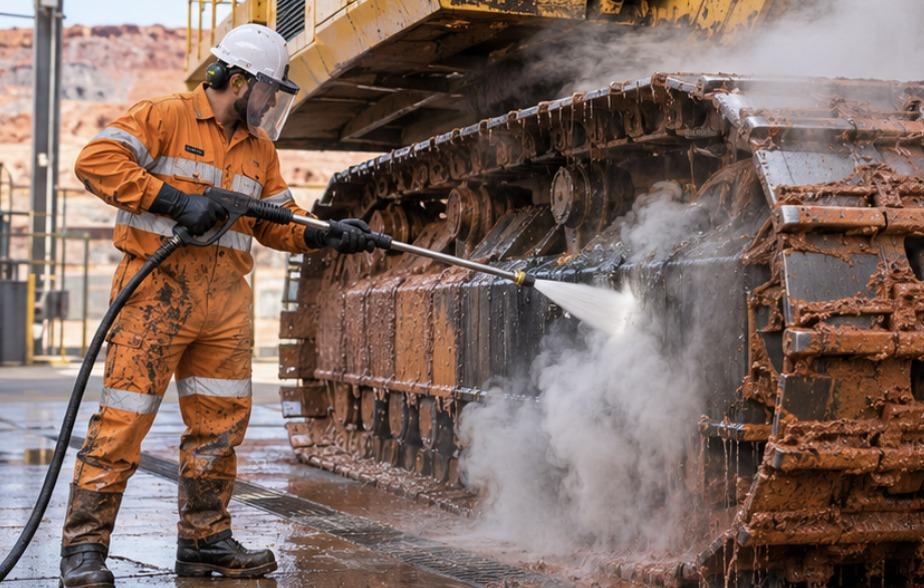
Industrial equipment cleaning
Service 04
Remove grease, oil and mud from machinery and steelwork before abrasive blasting or protective coating.
About the service
Mud can hide the condition of a machine’s tracks and frame. Oil and grease can cling to steel even after loose dirt falls away. A pressure wash removes this build-up so the team can inspect the exposed surface and assess what preparation it needs next.
Common applications
Heat helps loosen oily and greasy deposits on surfaces that can tolerate a hot wash.
Cold water lifts mud, dirt and loose debris from tracks, frames and exposed steelwork.
Washing removes surface contaminants ahead of abrasive work. Blasting can then remove rust or old coatings and create the profile the new coating needs.
What the work involves
A tracked machine packed with mud needs a different wash from a steel frame marked by hydraulic oil. Photos help the team assess the build-up and choose the wash.
Identify grease, oil, mud or other residues and show where they have collected.
Show the underlying material and any existing finish you want to preserve.
Flag seals, electrical components, openings and areas that need to stay dry.
Job assessment
Include a wide photo of the whole asset and close-ups of the areas that need attention.
Give the dimensions of each item and the number of machines, vehicles or sections of steelwork.
Tell us where the asset is, whether it can be transported and which faces or components are difficult to reach.
If blasting or coating is planned, include the finish specification and the date the asset is needed.
What to expect
The exact work changes with the asset, but the job moves through the same practical stages.
Identify the asset and show where the contamination is heaviest.
Confirm the areas to wash and any components that need protection.
The team uses hot or cold high-pressure water to remove the agreed build-up.
With the surface visible, the team can assess any further blasting or coating included in the job.
For a useful quote
Tell us what you need cleaned and whether washing is part of a larger blasting or coating job.
Include these details